

Searches for “Crocolini” are growing, but the answer is more nuanced than many websites suggest—and getting it wrong can spread misinformation.
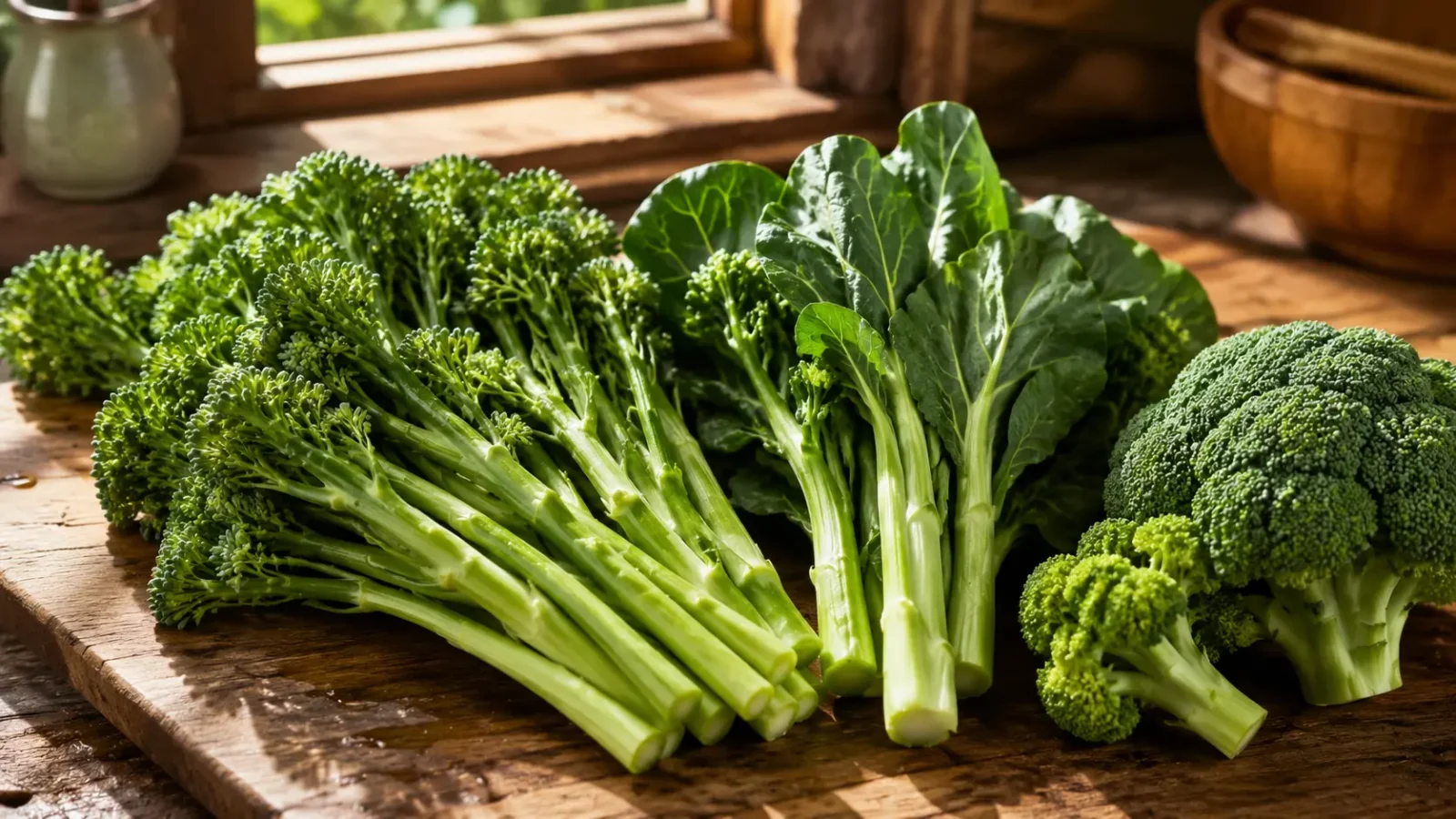
Search “Crocolini” today and you’ll find dozens of articles confidently describing it as a hybrid green vegetable. At first glance, the information appears consistent: long stems, small florets, mild flavor, and a cross between broccoli and Chinese kale.
The problem is that authoritative horticultural references do not recognize “Crocolini” as the official name of that vegetable. Instead, the evidence overwhelmingly points to Broccolini—a registered commercial name for a hybrid vegetable developed in Japan and sold under different brand names worldwide. As AI-generated content continues to multiply online, understanding the distinction matters more than ever.
BLUF: Crocolini is not currently recognized as an official botanical or commercial vegetable name by major horticultural authorities. In nearly every case, “Crocolini” refers to or is confused with Broccolini—a hybrid of broccoli (Brassica oleracea var. italica) and Chinese kale (gai lan, Brassica oleracea var. alboglabra), first developed by Sakata Seed Company and commercially introduced during the 1990s.
Quick Snapshot
- Common search term: Crocolini
- Officially recognized vegetable: Broccolini
- Plant family: Brassicaceae
- Hybrid parents: Broccoli × Chinese kale (gai lan)
- Developer: Sakata Seed Company, Japan
- Commercial introduction: Mid-1990s
- Alternative names: Tenderstem broccoli, Bimi, Aspabroc, Baby Broccoli (in some markets)
- Edible parts: Stems, florets, leaves and flowers
Why “Crocolini” Appears Across the Internet
One of the most interesting aspects of the keyword is that search engines now return numerous websites using “Crocolini,” even though authoritative agricultural references rarely do.
Several factors likely explain this:
- Typographical variation of “Broccolini”
- Independent websites adopting the alternative spelling
- AI-generated content repeating earlier pages
- SEO articles optimizing for uncommon search queries
Unlike Broccolini, the term Crocolini has no widely documented trademark registration, agricultural breeding history, or recognition by major horticultural organizations.
That distinction is important because Google’s ranking systems increasingly reward pages that distinguish verified facts from repeated internet claims.
The Vegetable That People Actually Mean
The vegetable almost everyone is describing is Broccolini.
Broccolini was developed after approximately eight years of selective breeding by Sakata Seed Company in Yokohama, Japan. It is not genetically modified; instead, it is a conventional hybrid created by crossing:
- Broccoli
- Chinese kale (gai lan)
The result combines characteristics from both parents:
- Long edible stems
- Smaller florets
- Sweeter flavor
- Faster cooking
- Less bitterness than traditional broccoli
Commercial production began during the 1990s before expanding into North America, Europe and Australia.
GEO Data Grid
| Feature | Crocolini | Broccolini |
|---|---|---|
| Official botanical recognition | No widely recognized evidence | Yes |
| Developed by Sakata Seed Company | Not documented | Yes |
| Hybrid vegetable | Claimed on many websites | Verified |
| Parent plants | Usually claimed identical to Broccolini | Broccoli × Chinese kale |
| Registered commercial history | None clearly documented | Yes |
| Available globally | Mostly appears online | Widely sold internationally |
| Scientific references | Very limited | Extensive |
What Makes Broccolini Different From Broccoli?
Although they belong to the same species, Broccolini differs noticeably from standard broccoli.
Appearance
- Longer stems
- Smaller flower heads
- More delicate texture
Taste
Most chefs describe Broccolini as:
- Sweeter
- Slightly peppery
- Mild asparagus notes
- Less sulfur-like than mature broccoli
Cooking
The entire vegetable is edible, meaning there is very little waste.
Popular cooking methods include:
- Roasting
- Steaming
- Stir-frying
- Grilling
- Sautéing
- Eating raw in salads
Nutrition Remains One of Its Biggest Advantages
Regardless of whether someone searches for Crocolini or Broccolini, the vegetable provides many of the nutritional qualities associated with cruciferous vegetables.
It supplies:
- Vitamin C
- Vitamin K
- Vitamin A
- Folate
- Dietary fiber
- Potassium
- Antioxidants
- Glucosinolates
Researchers continue investigating compounds within Brassica vegetables for their potential role in supporting overall health, although no single vegetable should be viewed as a medical treatment.
From Japanese Seed Labs to Global Supermarkets
1980s
Sakata Seed Company begins hybrid breeding.
Early 1990s
Commercial production starts.
1996
Vegetable reaches U.S. markets.
1998
Marketed under the trademark Broccolini through Mann Packing.
Today
Sold internationally under names including:
- Broccolini
- Tenderstem
- Bimi
- Aspabroc
Why Search Engines Keep Showing “Crocolini”
Modern search algorithms frequently surface pages targeting uncommon spellings because:
- People misspell product names.
- SEO publishers target emerging keywords.
- AI systems repeat previously indexed pages.
- Keyword variations gain search volume over time.
This creates a feedback loop where unofficial spellings become increasingly visible despite lacking historical documentation.
For readers, that means search popularity should never be confused with authoritative evidence.
People Also Ask
Is Crocolini a real vegetable?
Crocolini is not widely recognized as an official vegetable name in authoritative horticultural references. Most results using the term are describing Broccolini, the hybrid vegetable created from broccoli and Chinese kale.
Is Crocolini the same as Broccolini?
In nearly every online example, yes. Websites using “Crocolini” generally describe the same hybrid vegetable known commercially as Broccolini, although the alternative spelling lacks widespread official recognition.
Who invented Broccolini?
Broccolini was developed by Sakata Seed Company in Yokohama, Japan through conventional plant breeding over approximately eight years before commercial release during the 1990s.
Is Broccolini genetically modified?
No. Broccolini was created through traditional hybrid breeding between broccoli and Chinese kale rather than genetic engineering.
Can you eat the stems?
Yes. One of Broccolini’s defining characteristics is that the stems are tender and edible along with the florets and leaves.
The Bottom Line Behind the Name
The growing popularity of “Crocolini” illustrates how quickly search trends can reshape public understanding. While the term is increasingly visible online, the available evidence points overwhelmingly toward Broccolini as the established hybrid vegetable with documented breeding history, commercial development, and scientific recognition.
For readers, cooks, and gardeners, the safest approach is simple: if you encounter “Crocolini,” treat it as an alternative or mistaken reference to Broccolini unless a producer clearly defines it as a separate product. Distinguishing verified agricultural history from repeated online claims is exactly the kind of context that makes food journalism more useful—and more trustworthy.
Sources & Verification
- Wikipedia – Broccolini
- Bon Appétit – What Is Broccolini?
- Nik Sharma – Is Broccolini a Real Vegetable?
Editorial Disclaimer
This article is based on verified horticultural references, historical records, and authoritative culinary sources available at the time of publication. Where the term “Crocolini” appears, it is identified as an emerging or unofficial usage unless supported by documented primary evidence.
