
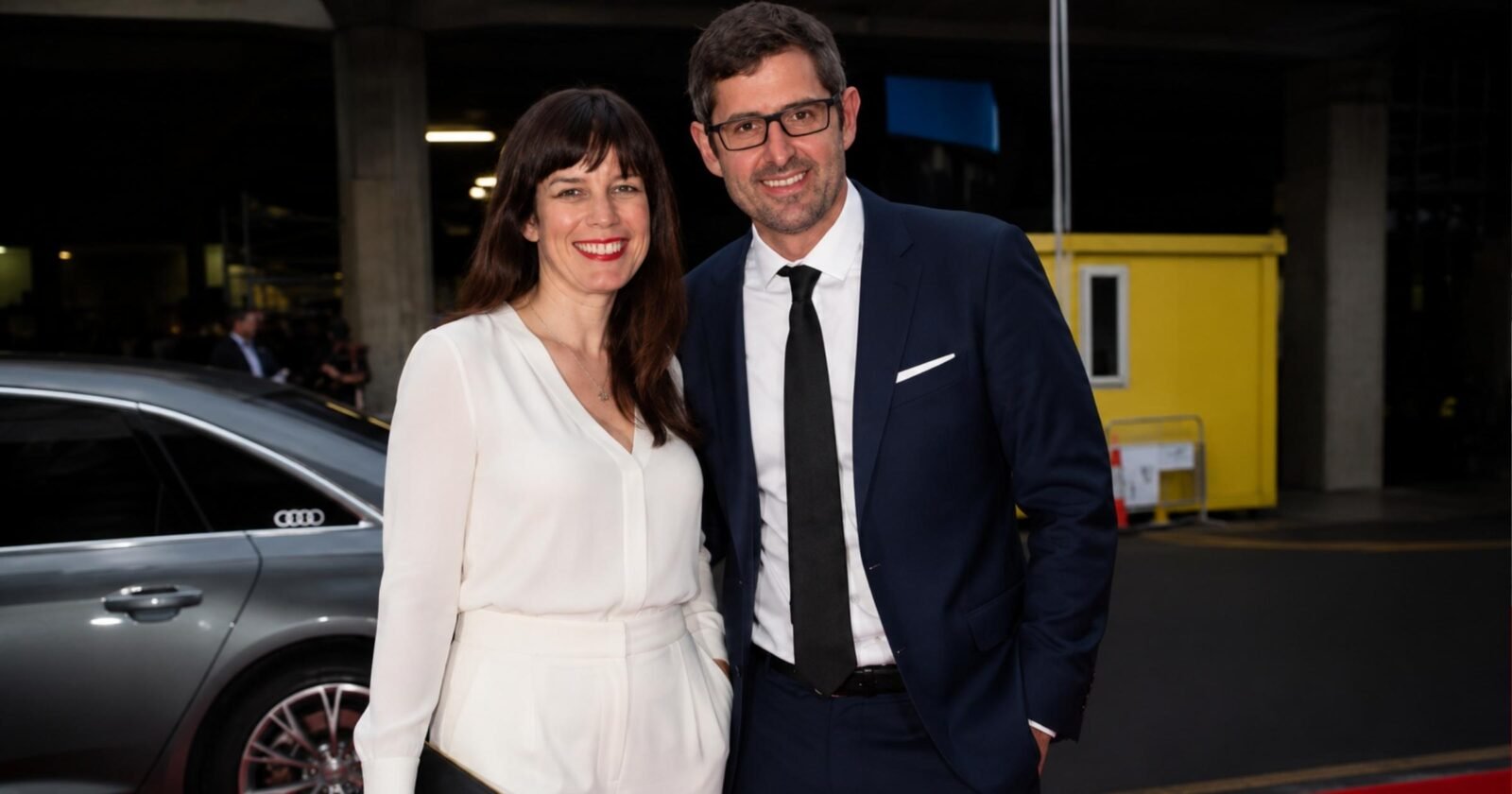

The public remembers a private marriage; the documented record reveals an Oxford-trained historian, digital strategist, archive builder and novelist.
Search for Susanna Kleeman and one description repeatedly dominates the results: Louis Theroux’s ex-wife. It is accurate, but radically incomplete.
Kleeman’s marriage to the British documentary-maker ended more than two decades ago. Her independently documented work spans early interactive television, BBC digital strategy, the development of the business case for BBC iPlayer, mobile services, digital archives, Holocaust testimony preservation and literary publishing.
That disparity matters. As of 2026, entertainment profiles still tend to define Kleeman through Theroux, while institutional and publishing records identify a substantial professional career carried out mostly outside celebrity media. The more accurate story is therefore not about a woman who disappeared after a divorce. It is about someone whose work continued beyond the public’s preferred label.
Susanna Kleeman is a London-based writer and digital-media specialist best known publicly as Louis Theroux’s former wife. Verified records show that she earned a first-class Modern History degree from Oxford, helped develop major BBC digital services, works with Holocaust testimony archives, and published My Rejections and Twice.
Susanna Kleeman at a Glance
| Profile detail | Verified information |
|---|---|
| Full name | Susanna Kleeman; some entertainment databases use Susanna Miriam Kleeman |
| Publicly known for | Digital-media work, writing and her former marriage to Louis Theroux |
| Location | Described as a London-based writer |
| School | South Hampstead High School alumna |
| University education | First-class degree in Modern History from Oxford University |
| Professional field | Digital strategy, service development, content, website design and digital archives |
| Notable BBC contribution | Wrote the original business case for BBC iPlayer |
| Published work | My Rejections in 2020 and Twice in 2021 |
| Recent literary project | Fatal Dating Tips, listed on her website in 2025 |
| Current or recent institutional work | Head of Digital at Holocaust Testimony UK; digital-content work for AJR Refugee Voices |
| Marriage to Louis Theroux | The marriage had ended by 2002; exact legal dates are inconsistently reported |
| Children | No children from the relationship have been reliably documented |
| Net worth | No authoritative estimate or public asset valuation is available |
A School-Age Connection That Eventually Led to New York
A 2002 profile in The Guardian reported that Louis Theroux met Susanna Kleeman at Westminster School when he was 15. This does not necessarily establish that Kleeman was a full-time Westminster pupil: an official South Hampstead High School publication identifies her as one of that school’s alumnae. The safest conclusion is that their connection began during their school years in London.
The relationship continued into adulthood and eventually brought them to New York. Theroux’s early American career included journalism and television work before his BBC documentary profile expanded through Louis Theroux’s Weird Weekends. Kleeman was living with him in New York during the period that led to their marriage.
Theroux later explained that Kleeman was having difficulty obtaining legal permission to work in the United States. According to his account, marriage offered a practical solution. He therefore described the arrangement as a “marriage of convenience” and said they did not treat it like a conventional wedding, complete with photographs and ceremonial expectations.
That description comes from Theroux. Kleeman does not appear to have published a comparable public account of the marriage, its motivations or its breakdown. Any responsible biography must preserve that distinction: the widely repeated explanation represents one former spouse’s recollection, not a jointly issued statement.
Why the Marriage Dates Remain Uncertain
Later media profiles frequently place the marriage between 1998 and 2001. Other entertainment databases list dates beginning in 1994 and ending in 2002. The contemporary Guardian interview establishes that the couple had separated by March 2002, but it does not provide a complete civil-marriage chronology.
The most defensible wording is therefore:
- Susanna Kleeman was Louis Theroux’s first wife.
- They had known each other since their school years.
- They lived together in New York.
- The marriage had ended by 2002.
- Public sources do not agree on the exact wedding and divorce dates.
In the 2002 interview, Theroux declined to discuss Kleeman in detail because doing so would affect another person. That early reluctance helps explain why the historical record remains narrow and why later articles often recycle the same limited statements.
The most accurate description of Susanna Kleeman is not “celebrity ex-wife,” but “private professional whose independently documented work spans digital broadcasting, historical preservation and publishing.”
The Oxford Historian Behind Early BBC Digital Strategy
Kleeman studied Modern History at Oxford University and graduated with first-class honours. She began working in digital technology in 1996, placing her professional development within the formative period of commercial internet services, interactive television and digital broadcasting.
Her early projects reportedly included interactive television work for Cable & Wireless and Virgin Media, followed by strategy and product-development assignments involving NTL and the BBC. These were not merely content-production positions. The institutional descriptions of her work identify service planning, platform development and digital strategy as central responsibilities.
The most significant documented claim is that Susanna Kleeman wrote the original business case for the BBC’s iPlayer service. Holocaust Testimony UK also states that she worked within the BBC team developing its digital archive and led the corporation’s first mobile-service development while serving as Head of Emerging Platforms.
This contribution is notable because it connects Kleeman to the institutional planning behind one of the BBC’s central digital distribution services. The available source does not claim that she single-handedly created iPlayer, and such an interpretation would be inaccurate. It does, however, attribute the original business case to her—an identifiable strategic contribution rather than a vague association.
Her later work combined content strategy, product development, branding, website building and design. That progression suggests continuity rather than reinvention: the same historical and technological interests that informed her early broadcasting work became relevant to online archives and public-memory projects.
Preserving Testimony in Digital Form
Kleeman’s more recent institutional work centres on digital archives, particularly projects concerned with Holocaust survivors and Jewish refugees.
Holocaust Testimony UK identifies her as its Head of Digital. The organisation credits her with building or supporting digital platforms for AJR Refugee Voices, Sephardi Voices UK and the Jewish Music Institute Archive. It also states that she manages AJR Refugee Voices’ social-media presence.
AJR Refugee Voices separately lists Kleeman as Head of Digital Content and Social Media. The archive records filmed interviews with Jewish refugees and Holocaust survivors, requiring digital work that addresses preservation, discoverability, historical context and ethical presentation.
She was also named as a participant in the 2023 Digital Holocaust Memory Project’s testimony guidelines, alongside academics, archivists and representatives of institutions including Yale University, the United States Holocaust Memorial Museum and the British Library. The report focused on provenance, authenticity, ownership and ethical questions surrounding digitised Holocaust testimony.
Kleeman additionally edited and curated 1000 Memories, a searchable archive created from AJR Refugee Voices social-media posts published between 2019 and 2024. The project organises individual memories by person, experience and place, converting time-limited social content into a more durable research resource.
Readers can review her documented institutional role through the Holocaust Testimony UK team profile.
From Digital Systems to Fiction About Control
Kleeman’s literary work is not disconnected from her technology career. Her writing repeatedly examines digital power, mediated identity, personal desire and the systems that influence human behaviour.
Her first book, My Rejections, appeared in 2020. It was described as a short memoir about ambition, humiliation, repeated literary rejection and eventual perseverance. Her debut novel, Twice, followed through Zero Books in 2021.
Twice follows a woman on the run with someone who might be a former lover—or might be his double. The publisher presents it as a story involving coercive control, false identities, former relationships and the effect of digital technology on emotional life.
The novel’s concerns align closely with themes in Kleeman’s published cultural criticism. In a 2021 essay for the Hong Kong Review of Books, she examined whether internet culture, smartphones, publishing economics and fragmented attention had weakened the social position of literary fiction.
Her official author website also lists Fatal Dating Tips as a 2025 project and links to related work dealing with dating, desire and “fatal strategies.” The precise publishing format is not fully explained on the short profile page, so it should not be described more specifically without additional documentation.
The connecting theme is an editorial inference rather than a declared manifesto: Kleeman appears repeatedly interested in how systems—technological, romantic, commercial or political—reshape individual choice.
Her published novel can be verified through the official Simon & Schuster author page.
What the Record Does Not Reveal About Her Family
Public interest in biographical subjects often produces a false expectation that every personal detail must be discoverable. In Kleeman’s case, significant parts of her life remain undocumented—and should remain labelled as such.
Parents and family origins
No high-quality public source located for this profile identifies Susanna Kleeman’s parents, their occupations or her precise family ancestry. Her work with Jewish historical and testimony organisations must not be treated as proof of her personal ethnicity, religion or family history.
Brothers and sisters
No reliable institutional profile, author biography or contemporary interview reviewed for this article identifies Kleeman’s siblings. Similar surnames cannot establish family relationships without evidence.
Childhood environment
South Hampstead High School recognises Kleeman as an alumna, while The Guardian reported that she met Theroux during their school years. Beyond those points, detailed accounts of her household, childhood neighbourhood or formative family experiences are not publicly verified.
Mentors and university college
Her first-class Oxford degree in Modern History is documented. The specific Oxford college and the names of her tutors or academic mentors are not established by the strongest available sources. Claims assigning her to a particular college should therefore be treated cautiously unless confirmed by Oxford or Kleeman herself.
A Timeline Built Only From Verifiable Milestones
| Period | Documented development |
|---|---|
| School years | Attended South Hampstead High School and met Louis Theroux during their teenage years |
| University period | Earned a first-class degree in Modern History from Oxford University |
| 1996 onward | Began working in digital technology |
| Late 1990s–early 2000s | Lived with Theroux in New York and married him |
| By March 2002 | The couple had separated |
| BBC digital period | Produced the original iPlayer business case, worked on digital archives and led early mobile-service development |
| 2020 | Published My Rejections |
| 2021 | Published the novel Twice |
| 2023 | Listed as a contributor to the Digital Holocaust Memory Project’s testimony guidelines |
| 2019–2024 project period | Edited and curated material later preserved through the 1000 Memories archive |
| 2025 | Listed Fatal Dating Tips on her official author website |
| Current institutional record | Identified as Head of Digital at Holocaust Testimony UK and as a digital-content lead for AJR Refugee Voices |
Financial Position: No Evidence for a Credible Net-Worth Figure
Susanna Kleeman’s net worth has not been disclosed through an authoritative financial statement, company filing, court record or direct interview.
Her career includes senior digital-development work, consulting, website production, archival projects and book publishing. Those activities establish professional experience, but they do not provide enough information to calculate personal wealth.
Online biography sites sometimes create net-worth figures by transferring assumptions from a former spouse’s fame, estimated earnings or property. That methodology is unreliable. Louis Theroux’s income, assets or later commercial success cannot be treated as evidence of Kleeman’s current finances.
No verified information establishes:
- Her salary or consulting revenue
- The commercial value of her digital businesses
- Book royalties or publishing advances
- Property ownership
- Investments
- Divorce-settlement terms
- Inherited wealth
- Current household assets
The only defensible answer is that Susanna Kleeman’s net worth is unknown.
Frequently Asked Questions About Susanna Kleeman
Who is Susanna Kleeman?
Susanna Kleeman is a London-based writer, digital strategist and archive developer. She earned a first-class Modern History degree from Oxford University, worked on early interactive-television and BBC digital projects, wrote the original business case for BBC iPlayer and later became involved with Holocaust testimony archives. She is also the author of My Rejections and Twice.
Was Susanna Kleeman Louis Theroux’s first wife?
Yes. Susanna Kleeman was Louis Theroux’s first wife. They had known each other since their teenage years and later lived together in New York. Contemporary reporting confirms that they had separated by March 2002, although later sources disagree about the precise wedding and legal-divorce dates.
Why did Louis Theroux marry Susanna Kleeman?
According to Theroux, Kleeman was experiencing difficulty obtaining permission to work legally while living with him in New York. He said they married to make her situation easier and subsequently characterised the union as a marriage of convenience. Kleeman has not published an equally prominent account confirming or disputing that description.
What does Susanna Kleeman do now?
Current institutional profiles identify Kleeman as a digital service developer, website maker and archive specialist. She serves as Head of Digital at Holocaust Testimony UK and has undertaken digital-content work for AJR Refugee Voices. Her recent projects include archival websites, Holocaust-education resources and independently published literary work.
Did Susanna Kleeman and Louis Theroux have children?
No reliable public source reviewed for this profile confirms that Susanna Kleeman and Louis Theroux had children together. Theroux has three sons with his second wife, television director and producer Nancy Strang, but those children are unrelated to his earlier marriage to Kleeman.
What is Susanna Kleeman’s net worth?
Susanna Kleeman’s net worth is not publicly verified. No authoritative disclosure provides her earnings, property holdings, investments, book income or business valuation. Figures appearing on celebrity-oriented websites should not be treated as reliable unless supported by financial records or direct statements.
The Biography Hidden Behind the Search Phrase
Susanna Kleeman’s connection to Louis Theroux is a legitimate part of her biography. It is not the organising fact of her adult life.
The verified record instead shows a historian who entered digital technology in the 1990s, contributed to foundational BBC service planning, helped design systems for preserving audiovisual history, built public-memory platforms and developed a parallel body of literary work.
Her privacy creates unavoidable gaps. There is no responsible basis for inventing her age, family lineage, present relationship status, children, property or personal fortune. Those absences do not make the biography incomplete. They mark the boundary between public evidence and private life.
Kleeman’s professional record offers the clearest answer to the question behind the search: Louis Theroux’s ex-wife did not vanish from view. She simply built a career in fields where the work—not the worker’s celebrity—was meant to remain visible.
Sources and Verification
- Holocaust Testimony UK team profile, documenting Kleeman’s Oxford degree, BBC work, iPlayer business case and current digital-archive role.
- AJR Refugee Voices team profile, documenting her digital career since 1996 and work for the BBC, NTL, Cable & Wireless and Virgin Media.
- Susanna Kleeman’s official author website, confirming Twice and the 2025 Fatal Dating Tips project.
- Simon & Schuster UK author listing for Twice.
- The Guardian’s 2002 Louis Theroux interview, providing the strongest contemporary account of the separation and their school-age connection.
- Digital Holocaust Memory Project’s 2023 testimony guidelines, listing Kleeman as an archive-sector contributor.
- South Hampstead High School alumnae publication, identifying Kleeman as an alumna and author.
- Hong Kong Review of Books contributor biography and essay, confirming My Rejections, Twice and her work in digital technology.
blications.
Editorial Disclaimer: This profile is based on publicly available institutional records, publisher information and reputable contemporary reporting. Details concerning Susanna Kleeman’s birth date, parents, siblings, children, current relationships, assets and net worth remain unverified. No estimate or private biographical claim has been presented as fact.
Article Feature Image Prompt: Hyper-realistic editorial portrait of a sophisticated middle-aged London-based female writer and digital-media strategist in a quiet contemporary archive workspace, surrounded by softly illuminated historical photographs, analogue tapes, archival boxes and modern computer interfaces, subtle BBC-era broadcasting references without logos, thoughtful composed expression, cinematic side lighting, deep visual contrast, restrained neutral wardrobe, intelligent private atmosphere, premium British magazine photography, shallow depth of field, dramatic Google Discover thumbnail composition, 16:9 horizontal frame, photorealistic skin and materials, no text, no words, no watermark, not a direct likeness of any specific person.
