
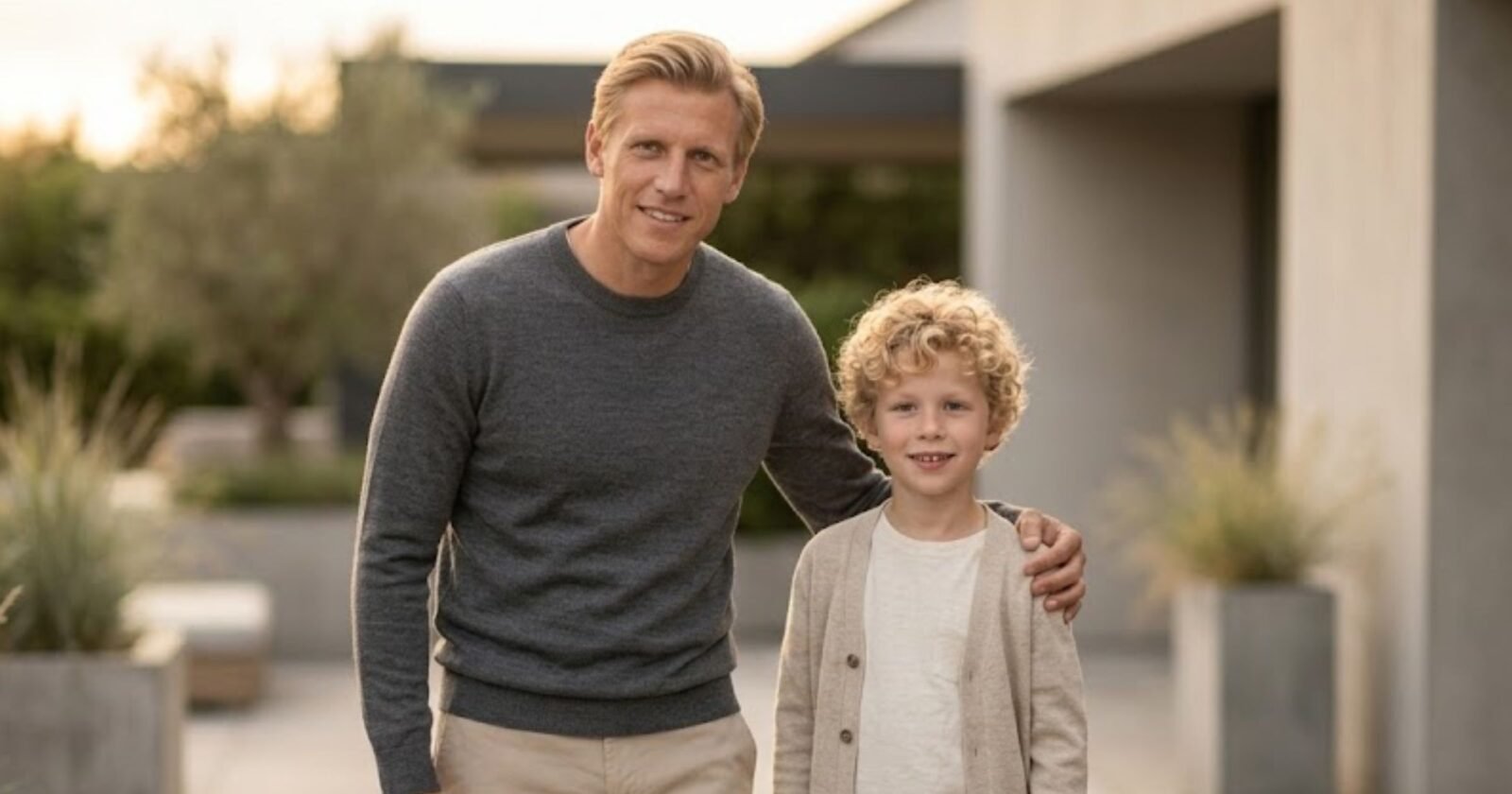

While his father narrated the natural world to billions, Robert Attenborough spent his career quietly decoding the biology of the people living within it.
Sir David Attenborough is arguably the most recognisable voice in natural history broadcasting. But long before drone footage and coral reefs, he was a young father in London raising two children — a son who would grow up to study human populations in Papua New Guinea instead of chasing television cameras. That son is Dr Robert Attenborough, and his story is less about fame by association and more about a deliberate, decades-long choice to stay out of it.
As Sir David’s public profile has only grown with age — including major attention around his milestone birthday and continued documentary work — public curiosity about the rest of the Attenborough family has followed. Robert is the answer to one of the most searched questions about that family: what happened to David Attenborough’s son?
Robert Attenborough is a British bioanthropologist, born in August 1951 to Sir David Attenborough and his first wife, Jane Elizabeth Ebsworth Oriel. He built his academic career at the Australian National University (ANU) in Canberra, where he holds the title of Honorary Senior Lecturer in Bioanthropology, alongside a research affiliation with the McDonald Institute for Archaeological Research at the University of Cambridge.
Quick Profile: Robert Attenborough
- Full field: Biological anthropology (bioanthropology)
- Born: August 1951
- Parents: Sir David Attenborough and Jane Elizabeth Ebsworth Oriel (married 1950)
- Sibling: Susan Attenborough, younger sister and former primary school headmistress
- Primary institution: Australian National University, School of Archaeology and Anthropology
- Secondary affiliation: McDonald Institute for Archaeological Research, University of Cambridge
- Research focus: Human population health, nutrition, demography and genetics, chiefly in Papua New Guinea
- Public profile: Deliberately low; declines the media spotlight his father occupies
A Household Built on Curiosity, Not Cameras
Robert was born a year after his parents married in 1950, into a home that was unusual by any standard. His father’s early work with the BBC meant that natural specimens, field stories and scientific conversation were part of ordinary domestic life rather than something confined to a screen. One anecdote David Attenborough has told publicly involves a salamander given to a young Robert, which unexpectedly gave birth not long after arriving in the household — a small but telling detail of a childhood spent close to biology in a very literal sense.
That environment didn’t turn Robert into a broadcaster. It turned him into a researcher. Where his father built a career on presenting the natural world to the public, Robert built one on studying human beings as biological subjects — how populations adapt, why health outcomes vary, and what genetics and environment reveal about human diversity.
From London Upbringing to the Field in Papua New Guinea
Robert’s academic path led him into biological anthropology, a discipline distinct from the archaeology and natural history his surname might suggest to a casual observer. His research career centred heavily on Papua New Guinea, where — by his own account in a published academic profile — he examined health, nutrition and demography, including localised fieldwork in the highlands fringe region of Sandaun (West Sepik) Province, an area marked by comparatively short life expectancy and variable child health outcomes tied to altitude and local ecology. A later strand of his work, conducted with colleagues including Professor Simon Easteal, moved into the anthropological genetics of Papua New Guinean populations.
He joined ANU in 1981 and spent the bulk of his career there, eventually stepping back from a full-time teaching role around 2013 while continuing to hold an honorary academic position and pursue research. His Cambridge connection, through the McDonald Institute, has run in parallel with his Australian work, linking his research to one of the world’s leading archaeology departments.
The Family Behind the Name
Susan Attenborough, Robert’s younger sister, took an entirely different professional route, working as an educator and eventually a primary school headmistress. Their mother, Jane Elizabeth Ebsworth Oriel, was married to David Attenborough for nearly five decades until her death in 1997. Sir David has spoken candidly in interviews and his own writing about the difficulty of balancing extensive filming schedules with time at home, while also crediting his family life with grounding him between expeditions.
Beyond these family facts, verified detail becomes scarce by design. Robert Attenborough has not given the kind of press interviews that would normally fill in a public biography — no confirmed information exists in reliable public records about a spouse, children, or day-to-day home life. That absence isn’t an oversight in reporting; it reflects a genuine, sustained preference for privacy that stands in sharp contrast to his father’s decades in front of the camera.
What About Net Worth?
Given the family name, “Robert Attenborough net worth” is a common search query — but there is no authoritative, publicly disclosed figure. Unlike his father, Robert has not built a media or commercial career with associated public earnings, book deals, or brand deals that would make a net worth estimate meaningful or verifiable. Academic salary bands at institutions like ANU are published in general terms, but attaching a specific net worth figure to Robert Attenborough would be speculation rather than fact, and none is included here.
Timeline: Key Points in Robert Attenborough’s Life
| Year | Event |
|---|---|
| 1950 | David Attenborough marries Jane Elizabeth Ebsworth Oriel |
| 1951 | Robert Attenborough is born |
| — | Susan Attenborough, his sister, is born |
| 1981 | Robert joins the Australian National University |
| 1997 | Jane Attenborough (Robert’s mother) dies |
| ~2013 | Robert steps back from full-time lecturing at ANU, retaining an honorary academic role |
| Present | Continues research affiliation with ANU and Cambridge’s McDonald Institute |
In his own academic profile, Robert Attenborough has described his recent research as centred on how health, nutrition and demography vary across Papua New Guinean communities, shaped by both national-level patterns and localised fieldwork.
Frequently Asked Questions
Who is Robert Attenborough?
Robert Attenborough is the elder son of Sir David Attenborough and a British bioanthropologist. He is best known academically for his research into human population health and genetics in Papua New Guinea, carried out primarily through the Australian National University.
Is Robert Attenborough David Attenborough’s only son?
Yes. David Attenborough has two children with his late wife Jane: Robert and his younger sister, Susan Attenborough. He has no other children.
What does Robert Attenborough do for a living?
Robert Attenborough is an academic. He holds an Honorary Senior Lecturer position in bioanthropology at the Australian National University and maintains a research affiliation with the University of Cambridge’s McDonald Institute for Archaeological Research.
Does Robert Attenborough appear in public or media?
No. Robert has kept a deliberately low public profile throughout his career, engaging with academic audiences rather than the press or broadcast media that made his father famous.
What is Robert Attenborough’s net worth?
There is no reliable, publicly verified net worth figure for Robert Attenborough. He has not pursued a media or commercial career, and no authoritative financial disclosures exist.
Where did Robert Attenborough conduct most of his research?
The majority of his fieldwork and academic research focused on Papua New Guinea, examining population health, nutrition, demography and, later in his career, anthropological genetics.
The Quieter Half of a Famous Story
Robert Attenborough’s career is a reminder that a famous surname doesn’t dictate a life. While his father narrated ecosystems to a global audience, Robert spent his working life inside one small, specific field — human biology in Papua New Guinea — publishing research that will likely never reach the audience his father’s documentaries do, by his own choice. That contrast, rather than any scandal or revelation, is the real story here.
Sources & Verification
- The Conversation — Robert Attenborough’s academic author profile
- Australian National University, School of Archaeology and Anthropology (institutional listing)
- University of Cambridge, McDonald Institute for Archaeological Research (institutional listing)
- Public interviews and writings of Sir David Attenborough referencing his family life
Editorial Disclaimer: This article is based on publicly available academic profiles, institutional records and previously published interviews. Where information — such as net worth or details of personal/family life beyond what is publicly confirmed — is not independently verifiable, this has been stated plainly rather than estimated or implied.
