
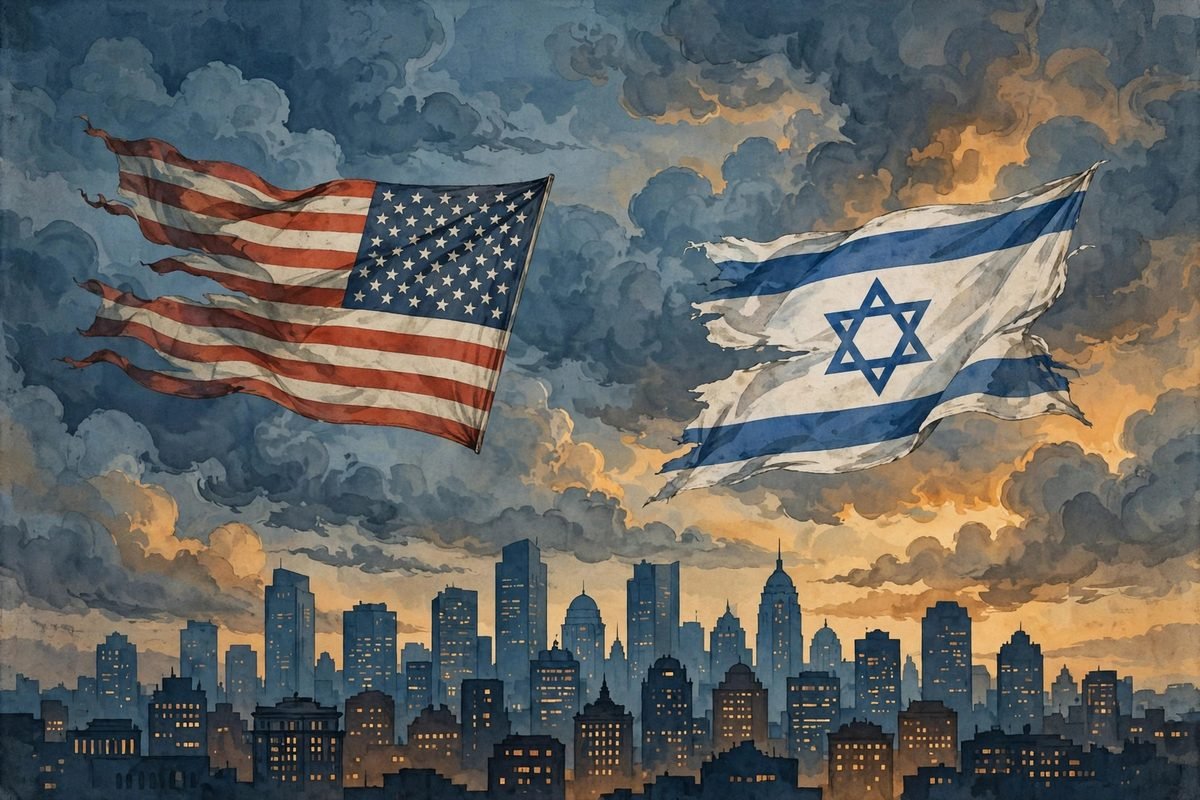

Trump Ends US Aid to Israel: Election Day Announcement — What We Know So Far
It is hard to think of a president more pro-Israel in modern times — and that is precisely why Tuesday’s announcement landed like a thunderclap. As Americans were voting in the 2026 midterm elections, Donald Trump sat down with Fox News’ Fox & Friends and declared that the United States would end its roughly $4 billion in annual aid to Israel by the end of the year, insisting the deal had already been struck with Benjamin Netanyahu.
BLUF: On Election Day, 3 November 2026, Donald Trump said the United States would stop paying Israel its annual aid — about $4 billion a year — by year’s end, claiming he had agreed the move with Prime Minister Benjamin Netanyahu months ago because Israel no longer needs it. There has been no confirmation from Netanyahu’s office or the US State Department, and analysts note the money is appropriated by Congress, which the president cannot unilaterally overrule.
At a Glance
- Who: US President Donald Trump, speaking about Israeli Prime Minister Benjamin Netanyahu
- What: Said the US will end roughly $4 billion in annual aid to Israel by the end of 2026
- When: 3 November 2026, in a Fox & Friends interview on Election Day
- Current aid: About $3.8 billion a year in military assistance under a 10-year deal signed in 2016, due to run until 2028
- The catch: The funds are appropriated by Congress, so Trump cannot end them by decree — and neither Israel nor the State Department has confirmed the move
The Election Day Interview
“As far as paying Israel, Bibi Netanyahu and I have made a deal that we give Israel $4 billion a year, and we made a deal months ago that we’re stopping,” Trump said, according to Al Jazeera. “By the end of this year, we won’t be paying Israel.”
His reasoning, as he put it, was simple: Israel has become wealthy enough to stand on its own. “Israel is a very thriving country. They don’t need it,” he said. And he claimed the idea came not from Washington but from Jerusalem itself. “Bibi Netanyahu brought it up. He said, ‘I think it would be appropriate if we do not receive aid,'” Trump said. “Because they don’t need it, Brian.”
Pressed on whether he was talking about military aid or a direct payment, Trump waved the distinction away: “Any way you want to define it.” He added a caveat — “We’ll help Israel if they need it” — but the headline was unambiguous.
The $3.8 Billion Question
The numbers deserve a closer look, because Trump’s “$4 billion” is a rounded figure. Under a 10-year memorandum of understanding signed in 2016, the United States provides Israel with $3.8 billion a year in military assistance, covering fiscal years 2019 through 2028. The arrangement was designed to run for another two years beyond this one.
That money is not a blank cheque: it is mostly spent on American-made weapons, meaning much of it flows back to US arms manufacturers. And crucially, as Al Jazeera’s reporting emphasised, it is appropriated by Congress — the president cannot simply switch it off. Experts quoted by the network expressed scepticism that the administration would, or even could, follow through by the end of the year.
When asked for comment, the US State Department did not immediately respond, and there was no confirmation of any agreement from Netanyahu’s office or Israel’s foreign minister.
An Election Day Calculation
Trump made no secret of the politics behind the announcement. He framed the aid as a liability for Republicans at the ballot box, naming Michigan’s Democratic Senate nominee Abdul El-Sayed — a vocal critic of US support for Israel — as the kind of opponent who turns the issue into ammunition.
“Why should we suffer the slings from lunatics like an El-Sayed when they [Israel] don’t need it?” Trump said, calling the aid “the best talking point that these lunatics on the left have.”
He has a point about the shifting ground. In July, nearly half of House Democrats voted for an amendment to cut off aid to Israel, offered by the libertarian-leaning Republican Thomas Massie. The measure failed, 314 to 104, but the vote revealed a growing rupture over Israel policy, sharpened by the war in Gaza. Support for Israel — once one of the most bipartisan positions in American politics — has become a live wire on both sides.
A Week After Israel’s Hung Parliament
The timing is striking for another reason. The announcement came just a week after Israel’s election on 27 October, in which Netanyahu lost his governing majority and no party or bloc emerged with a clear path to a coalition. Trump had offered Netanyahu his full-throated endorsement in that campaign, calling him “the kind of partner that the United States of America is demanding of Israel.”
With Israel’s leadership now uncertain and coalition talks under way, the question of who in Jerusalem signed off on Trump’s claimed “deal” — and whether it survives whatever government emerges — hangs over the announcement.
Trump also stressed that Washington would continue to sell weapons to its closest Middle East ally, Reuters reported — a significant distinction, since a shift from grants to sales would still keep the arms flowing while changing who pays. The broader financial backdrop is stark: the Associated Press reported a recent Pentagon estimate putting US spending on the Iran war at $47.1 billion.
What Happens Next
Whether this becomes a tangible policy shift or remains an Election Day talking point will depend on three things: a formal White House statement, a response from Israel’s government, and — most importantly — Congress, which holds the purse strings. Until those pieces move, the announcement stands as what it is: a stunning signal from a president who has long called himself Israel’s greatest friend, conceding that American money to Israel has become politically unsustainable.
People Also Ask
How much aid does the US give Israel each year?
The United States provides about $3.8 billion a year in military assistance to Israel under a 10-year memorandum of understanding signed in 2016 and covering fiscal years 2019 through 2028. Donald Trump referred to the figure as roughly $4 billion a year in his 3 November 2026 interview.
Can Trump end aid to Israel on his own?
Probably not directly. The aid is appropriated by Congress, which must pass spending bills every year to release the funds. Analysts quoted by Al Jazeera expressed scepticism that the administration could unilaterally cut the aid by the end of the year.
Why did Trump announce the aid cut on Election Day?
Trump explicitly tied the announcement to midterm politics, arguing that US aid to Israel has become a damaging talking point for Democrats — naming Michigan Senate nominee Abdul El-Sayed — and asking why Republicans should “suffer the slings” over money Israel no longer needs.
Has Israel confirmed the deal to end US aid?
As of publication, there has been no confirmation from Prime Minister Benjamin Netanyahu’s office, Israel’s foreign minister, or the US State Department that any agreement to end the aid was reached.