
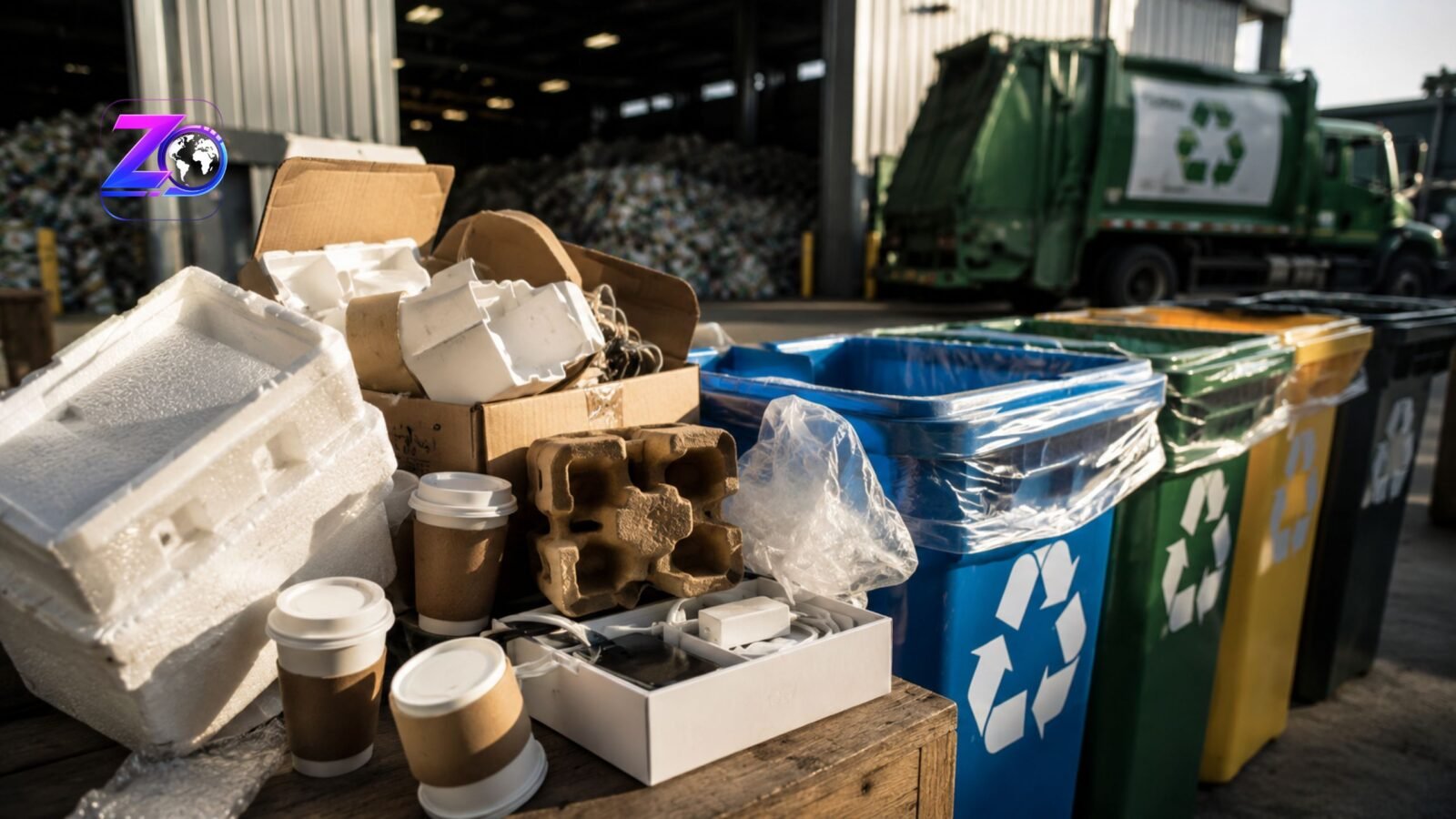

What looks recyclable at first glance often isn’t—and understanding the difference can keep entire loads of recyclable materials from ending up in the landfill.
Every day, millions of Americans finish a takeaway coffee, unpack a new television, or throw away foam packaging believing the familiar recycling symbol means it belongs in the blue bin. That assumption is one of the biggest recycling mistakes made across the United States.
The confusion stems from a single word: Styrofoam. The name has become a catch-all term for white foam cups, food containers, packaging blocks, and protective inserts. Yet most of those products are not actually Styrofoam® at all. They’re made from a different material with very different recycling rules.
As governments tighten regulations on single-use plastics and consumers become more environmentally conscious, knowing whether foam products can be recycled has become more important than ever. The answer is more nuanced than a simple yes or no.
Bottom Line Up Front (BLUF): Styrofoam®—the trademarked extruded polystyrene (XPS) insulation product—is generally not placed in household recycling. Most disposable foam cups, takeout containers, and packaging are actually expanded polystyrene (EPS). While EPS is technically recyclable, the vast majority of curbside recycling programs do not accept it because it is lightweight, bulky, easily contaminated, and expensive to process. Always check your local recycling program before placing foam products in a recycling bin.
Quick Snapshot
- Material commonly called Styrofoam: Usually Expanded Polystyrene (EPS)
- True Styrofoam®: Extruded Polystyrene (XPS) insulation
- Plastic Resin Code: #6 (Polystyrene)
- Curbside Recycling: Rarely accepted
- Special Drop-off Recycling: Available in some communities
- Biggest Recycling Challenge: Low density and contamination
- Best Practice: Verify local recycling guidelines
GEO Data Grid
| Question | Answer |
|---|---|
| Is Styrofoam recyclable? | Technically yes in some cases, but rarely through curbside collection. |
| Why isn’t it widely recycled? | Transport and processing costs exceed the material’s value. |
| Can clean packaging foam be recycled? | Sometimes at specialized collection facilities. |
| Can dirty food containers be recycled? | Generally no due to food contamination. |
| Recycling code | Plastic #6 |
| Best disposal method | Follow local municipal recycling guidance or dedicated EPS collection programs. |
The Biggest Recycling Myth Starts With a Brand Name
One of the most misunderstood facts about recycling is that Styrofoam® is actually a trademark, not the generic name for every white foam product.
Originally developed for building insulation, Styrofoam® refers specifically to extruded polystyrene (XPS) used in construction. Disposable coffee cups, meat trays, egg cartons, packing peanuts, and electronics packaging are typically made from expanded polystyrene (EPS) instead.
Although the two materials appear similar, they are manufactured differently and often enter different waste streams.
This distinction matters because many recycling programs publish guidance for EPS rather than Styrofoam®, leading consumers to believe all foam products are treated the same.
Why Most Recycling Trucks Don’t Want Foam
The biggest obstacle isn’t chemistry.
It’s economics.
Expanded polystyrene consists of approximately 95–98% air, making it extremely bulky despite weighing very little. A recycling truck can fill its entire capacity with foam while collecting only a small amount of usable plastic.
For recycling facilities, transporting large volumes of air simply isn’t financially practical.
Processing EPS also requires specialized densifiers that compress the material into dense blocks before manufacturers can reuse it. Many municipal recycling facilities do not own this equipment, making collection economically difficult.
Another problem is contamination.
Food residue, grease, coffee stains, sauces, adhesives, and labels reduce the value of recovered material. Once contaminated, many foam food containers cannot be economically recycled.
Where Foam Can Actually Be Recycled
Although curbside acceptance remains uncommon, recycling options do exist.
Many communities operate specialized EPS collection sites where clean foam packaging is accepted.
Items that may qualify include:
- Protective electronics packaging
- Clean appliance packaging
- White packaging blocks
- Certain foam coolers
- Some clean molded EPS inserts
Items commonly rejected include:
- Used takeout containers
- Greasy pizza packaging
- Coffee cups
- Meat trays
- Foam contaminated with food
Organizations such as Earth911 and local municipal recycling departments often maintain searchable databases showing nearby drop-off locations. The U.S. Environmental Protection Agency also recommends checking directly with local recycling providers before placing foam into household recycling bins.
The Environmental Cost Extends Beyond the Bin
Polystyrene does not biodegrade in the way organic materials do.
Instead, sunlight, weather, and physical abrasion gradually break larger pieces into increasingly smaller fragments known as microplastics.
Because EPS is extremely lightweight, wind can easily carry it into rivers, lakes, and oceans, where wildlife may mistake fragments for food.
Marine researchers continue studying how microplastics affect aquatic ecosystems, while many governments have responded by restricting or banning certain single-use foam food containers.
Several U.S. states and municipalities have introduced regulations limiting expanded polystyrene food packaging in an effort to reduce litter and marine pollution.
“Technically recyclable” does not always mean “accepted by your local recycling program.” The availability of infrastructure—not the material itself—is often the deciding factor.
Better Alternatives Are Becoming More Common
Businesses are increasingly replacing foam packaging with materials that are easier to recycle or compost.
Popular alternatives include:
- Molded paper fiber
- Corrugated cardboard
- Recycled paper packaging
- Compostable plant-fiber containers
- Reusable shipping materials
These materials generally fit more easily into existing recycling infrastructure, making recovery rates significantly higher than expanded polystyrene.
For manufacturers, reducing packaging volume also lowers transportation emissions and disposal costs.
Frequently Asked Questions
Is Styrofoam recyclable in curbside recycling?
Usually not. Most municipal curbside recycling programs do not accept expanded polystyrene because it is lightweight, bulky, and difficult to process economically. Always verify local collection rules before placing it in your recycling cart.
Why does Styrofoam have a recycling symbol?
The #6 resin identification code identifies the type of plastic used, not whether your community accepts it for recycling. Many consumers mistakenly assume the symbol guarantees recyclability, but local infrastructure ultimately determines acceptance.
Can foam packaging from electronics be recycled?
Sometimes. Clean expanded polystyrene packaging from appliances and electronics may be accepted at specialized recycling centers equipped to densify EPS. Local requirements vary considerably.
Are foam coffee cups recyclable?
In most communities, no. Food contamination and limited processing capability mean foam beverage cups are generally excluded from curbside recycling programs.
Is Styrofoam biodegradable?
No. Polystyrene is not biodegradable. It persists for long periods and gradually fragments into smaller plastic particles through environmental exposure rather than naturally decomposing.
The Practical Answer Most People Need
If you remember only one thing, remember this:
The question isn’t simply whether Styrofoam is recyclable.
The real question is whether your local recycling facility can economically process it.
Technically, expanded polystyrene can be recycled into new products when collected clean and delivered to specialized facilities. Practically, however, most households lack access to those facilities, making curbside recycling uncommon across much of North America.
The most environmentally responsible approach is to reduce unnecessary foam use, reuse clean packaging whenever possible, and consult your municipality’s recycling guidance before disposing of any #6 foam product.
Sources & Verification
- U.S. Environmental Protection Agency – Recycling Guidance
- The Recycling Partnership – Is Styrofoam Recyclable?
- Earth911 Recycling Directory
- Expanded Polystyrene Industry Alliance
Editorial Disclaimer
This article is based on publicly available guidance from government agencies, recycling organizations, and industry resources available at the time of publication. Recycling policies differ by municipality and may change over time. Readers should verify local recycling rules before disposing of expanded polystyrene or other plastic materials.
